

NEWS & BLOG
How Needle-Punched Felt Filter Bags Handle High-Humidity Operating Conditions
Release time:
2026-04-22
In industrial dust removal processes, high-humidity operating conditions are one of the critical factors affecting the performance and service life of filter bags. Although needle-punched felt filter bags possess excellent filtration capabilities, they may still encounter issues—such as bag clogging, increased resistance, or even corrosion—when operating in high-humidity environments. Therefore, implementing appropriate countermeasures specifically tailored to high-humidity conditions is of paramount importance.
In industrial dust removal processes, high-humidity operating conditions are one of the critical factors affecting the performance and service life of filter bags. Although needle-punched felt filter bags possess excellent filtration capabilities, they may still encounter issues—such as bag clogging, increased resistance, or even corrosion—when operating in high-humidity environments. Therefore, implementing appropriate countermeasures specifically tailored to high-humidity conditions is of paramount importance.
I. Selecting Appropriate Filter Media Materials
In high-humidity environments, the hydrolysis resistance of the filter media is crucial. Common polyester (PET) needle-punched felts are prone to hydrolysis under conditions of high humidity and high temperature; therefore, it is recommended to prioritize materials with superior hydrolysis resistance, such as PPS (Polyphenylene Sulfide) or PTFE (Polytetrafluoroethylene). These materials not only offer excellent moisture resistance but also possess strong corrosion resistance, making them suitable for complex operating environments.
II. Optimizing Surface Treatment Processes
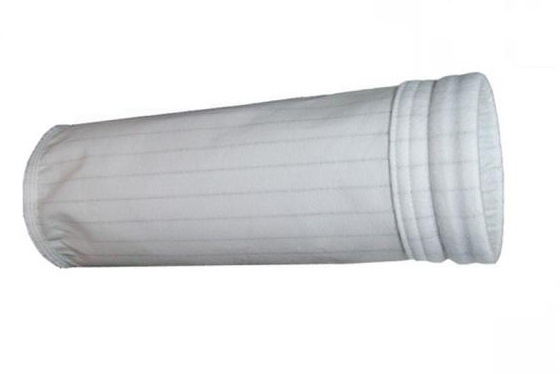
To mitigate the impact of moisture on filter bags, needle-punched felt filter bags can undergo water- and oil-repellent treatments or membrane lamination. PTFE-laminated filter bags effectively block water vapor from penetrating the interior of the fibers, thereby preventing dust adhesion and caking, which significantly reduces the risk of bag clogging. Additionally, the smooth surface facilitates dust removal (cleaning) and enhances operational stability.
III. Controlling Flue Gas Temperature and Dew Point
High-humidity conditions are often accompanied by flue gas temperatures approaching the dew point; should the temperature drop below the dew point, condensation will occur. Therefore, through process control or the installation of thermal insulation measures, the flue gas temperature should be consistently maintained at 10–20°C above the dew point to prevent water vapor from condensing on the surface of the filter bags.
IV. Enhancing the Efficiency of the Dust Cleaning System
In high-humidity environments, dust adheres more readily to the surface of filter bags, making dust removal more challenging. Consequently, the dust cleaning system requires optimization—for instance, by appropriately adjusting the pressure and frequency of pulse-jet cleaning—to ensure that accumulated dust is removed from the filter bags promptly and effectively, thereby preventing a continuous rise in system resistance.
V. Strengthening Equipment Sealing and Thermal Insulation
The airtightness of dust removal equipment directly influences the ingress of cold outside air. If cold air infiltrates and mixes with hot, humid gas, condensation is highly likely to occur. Therefore, the sealing integrity of the equipment should be reinforced, and both the dust collector housing and associated ductwork should undergo thermal insulation treatment to stabilize the internal temperature environment. VI. Regular Maintenance and Monitoring
Filter bags made of needle-punched felt operating under high-humidity conditions require more frequent inspection and maintenance. By monitoring parameters such as differential pressure fluctuations and emission concentrations, anomalies can be detected in a timely manner and corrective measures implemented to prevent issues from escalating.
Addressing high-humidity operating conditions requires a multi-faceted approach encompassing material selection, process optimization, operational control, and maintenance management. Only through such systematic optimization can the full performance potential of needle-punched felt filter bags be realized, thereby achieving stable and highly efficient dust removal results.
latest News


CONTACT
Add:No. 8 Xinyuan Road, Shizhuang Industrial Park, Funing, Jiangsu Province
Tel:+8613862107418 / +8618913761835
WhatsApp:+8613862107418/+8618913761835


