

NEWS & BLOG
Application Practice of Polyester Needle-Felt Filter Bags in Dust Removal in the Cement Industry
Release time:
2026-02-10
The cement production process involves multiple stages, including raw material crushing, grinding, calcination, and finished product conveying. This generates large quantities of fine, abrasive dust, placing high demands on the filtration performance and stable operation of dust removal systems. Baghouse dust collectors are widely used in the cement industry due to their high efficiency and stable dust removal effect. Among them, polyester needle-felt filter bags, with their excellent comprehensive performance, have become a commonly used filter material for dust removal under normal temperature conditions.
The cement production process involves multiple stages, including raw material crushing, grinding, calcination, and finished product conveying. This generates large quantities of fine, abrasive dust, placing high demands on the filtration performance and stable operation of dust removal systems. Baghouse dust collectors are widely used in the cement industry due to their high efficiency and stable dust removal effect. Among them, polyester needle-felt filter bags, with their excellent comprehensive performance, have become a commonly used filter material for dust removal under normal temperature conditions.
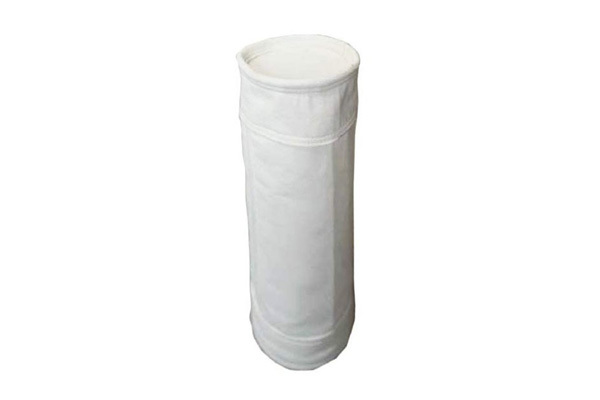
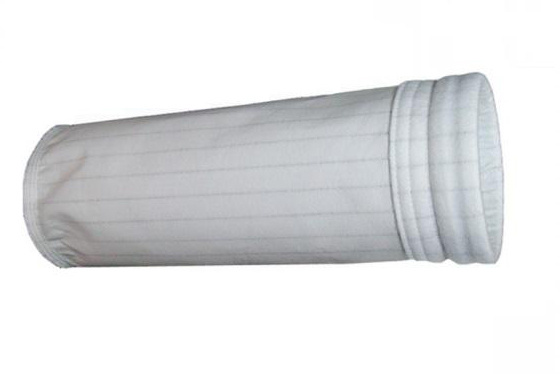
Polyester needle-felt filter bags are made primarily of polyester fiber through a needle-punching process, featuring a uniform fiber structure, high porosity, and good air permeability. In the raw material grinding, packaging, and conveying stages of cement production, where dust concentration is high and particle size distribution is wide, polyester needle-felt filter bags can effectively trap dust particles, achieving stable filtration with low operating resistance and meeting current environmental emission standards.

In practical applications, cement dust has a certain degree of abrasiveness, and long-term operation can easily damage the surface of the filter bags. Surface treatments such as singeing and calendering of polyester needle-feed filter bags can reduce dust embedding within the filter media, decrease filter bag wear, and improve cleaning efficiency. For operating conditions with a risk of condensation, water- and oil-repellent polyester needle-feed filter bags can be selected to enhance their moisture resistance and reduce bag clogging.
Polyester needle-feed filter bags work well in conjunction with pulse-jet cleaning. With proper control of the pulse-jet pressure and cleaning cycle, the dust layer on the filter bag surface can be removed promptly, maintaining low filtration resistance, thereby reducing system energy consumption and extending filter bag lifespan. This is of great significance for cement plants to achieve continuous and stable production.
From an economic perspective, polyester needle-feed filter bags have stable raw material sources, mature manufacturing processes, and relatively low overall costs, making them highly cost-effective in ambient temperature cement dust removal applications. With proper selection and standardized maintenance, the filter bags can maintain good performance for a long time, effectively reducing the operation and replacement costs of the dust removal system.
Polyester needle-feed filter bags demonstrate advantages such as high filtration efficiency, stable operation, and controllable maintenance costs in cement industry dust removal applications. With increasingly stringent environmental protection requirements, its application in baghouse dust collection systems in the cement industry still has broad development prospects.
latest News


CONTACT
Add:No. 8 Xinyuan Road, Shizhuang Industrial Park, Funing, Jiangsu Province
Tel:+8613862107418 / +8618913761835
WhatsApp:+8613862107418/+8618913761835


