

NEWS & BLOG
Key Factors Affecting the Filtration Accuracy of Round Filter Bags
Release time:
2026-01-28
In industrial dust collection systems, round filter bags, as the core filtration components of baghouse dust collectors, directly impact dust emission levels, equipment operational stability, and environmental compliance
In industrial dust collection systems, round filter bags, as the core filtration components of baghouse dust collectors, directly impact dust emission levels, equipment operational stability, and environmental compliance. The factors influencing the filtration accuracy of round filter bags are diverse, including the performance of the materials themselves, as well as their structural design and operating conditions.
The filter media material is a fundamental factor determining filtration accuracy. Different fiber materials exhibit significant differences in fiber diameter, pore structure, and surface characteristics. For example, commonly used filter media such as polyester, aramid, and glass fiber have varying capacities for capturing fine dust. The finer and more uniform the fiber distribution, the more stable the resulting pore size, and the stronger the filter bag's ability to intercept fine particles, thus contributing to improved overall filtration accuracy.
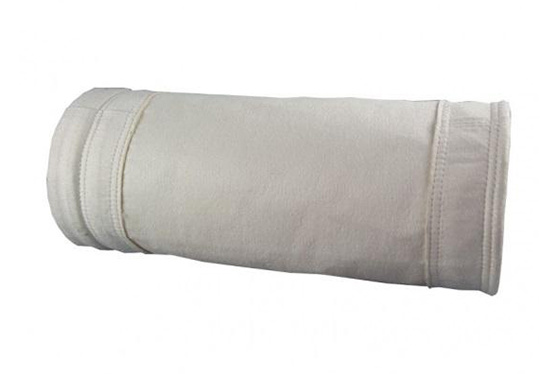
The surface treatment process of the filter bag has a significant impact on filtration accuracy. Round filter bags that have undergone coating, singeing, or antistatic treatment can form a denser filtration layer on the filter media surface, reducing dust penetration. Especially during the initial operation phase, surface treatment processes can effectively shorten the dust layer formation time, allowing filtration accuracy to stabilize more quickly.
The structural design of Round Filter Bags is equally important. The sewing process, interface sealing, and bag opening structure all affect the actual filtration effect. Uneven stitching or poor sealing can easily create localized dust leakage channels, reducing overall filtration accuracy. Therefore, high-quality manufacturing processes and a reasonable structural design are crucial prerequisites for ensuring stable filtration performance.
Operating conditions are also a significant external factor affecting filtration accuracy. Excessively high airflow velocity and large fluctuations in dust concentration increase the scouring intensity of dust on the filter bag, affecting the stability of the dust layer. Properly controlling the filtration velocity and selecting the appropriate Round Filter Bag specifications based on operating conditions helps maintain long-term stable filtration accuracy.
The filtration accuracy of Round Filter Bags is the result of the combined effect of multiple factors. By rationally selecting filter media materials, optimizing surface treatment processes, improving structural design, and applying them scientifically in conjunction with actual working conditions, the filtration performance of Round Filter Bags in industrial dust removal systems can be effectively improved, providing a reliable guarantee for achieving stable and compliant dust emissions.
latest News


CONTACT
Add:No. 8 Xinyuan Road, Shizhuang Industrial Park, Funing, Jiangsu Province
Tel:+8613862107418 / +8618913761835
WhatsApp:+8613862107418/+8618913761835


