

NEWS & BLOG
The Application Value of Fiberglass Woven Filter Bags in Industrial Dust Collection Systems
Release time:
2026-01-08
Fiberglass woven filter bags, with their high temperature resistance, good dimensional stability, and reliable filtration performance, demonstrate high application value in various industrial dust collection systems.
In industrial production processes, dust control is a crucial step in ensuring safe equipment operation, improving the working environment, and meeting environmental emission requirements. As the core device for dust control, the performance of the filter elements in industrial dust collection systems directly impacts overall operational efficiency. Fiberglass woven filter bags, with their high temperature resistance, good dimensional stability, and reliable filtration performance, demonstrate high application value in various industrial dust collection systems.
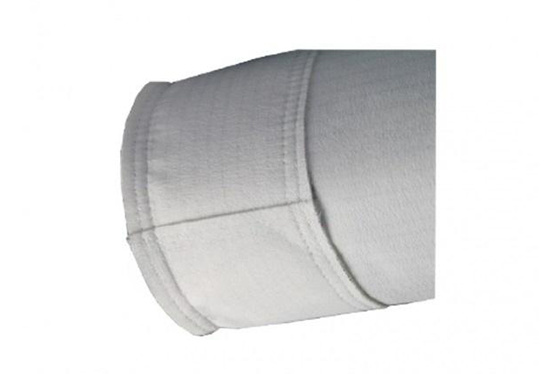
Fiberglass woven filter bags are made from glass fiber yarn using a woven process. The material itself possesses excellent heat resistance, allowing for long-term stable operation under high-temperature conditions. This characteristic makes them ideal for high-temperature flue gas dust collection in industries such as cement, metallurgy, chemicals, and power generation. In high-temperature environments, the filter bags are less prone to thermal shrinkage or performance degradation, maintaining stable filtration gaps and structural forms, thus ensuring the continuity and reliability of the dust collection system.
In terms of filtration performance, fiberglass woven filter bags offer good air permeability and low operating resistance, helping to maintain stable system airflow and reduce fan energy consumption. Through a well-designed fabric structure and post-processing techniques, the filter bag can achieve high dust removal performance while ensuring dust collection efficiency, making the cleaning process smoother and reducing the impact of dust accumulation on the filter bag surface.
From the perspective of system operational stability, the dimensional stability of the fiberglass woven filter bag is particularly outstanding. Under long-term operation and frequent cleaning conditions, the filter bag is not prone to tensile deformation or length changes, which helps maintain a good fit between the filter bag and the tube sheet and frame, reducing the risk of damage and air leakage. This is especially important for large baghouse dust collectors, helping to extend the service life of the entire system.
Furthermore, the fiberglass woven filter bag also has economic advantages. Although its initial cost is slightly higher than some conventional filter media, its long service life and stable operating performance effectively reduce replacement frequency and maintenance costs, lowering the overall operating cost of the system. In summary, the fiberglass woven filter bag, with its high-temperature resistance, stable operation, and economic reliability, provides strong support for achieving efficient and stable dust control in industrial dust collection systems.
latest News


CONTACT
Add:No. 8 Xinyuan Road, Shizhuang Industrial Park, Funing, Jiangsu Province
Tel:+8613862107418 / +8618913761835
WhatsApp:+8613862107418/+8618913761835


